About this research
This report draws on a survey of 300 senior enterprise technology, risk and AI leaders across the United States, Canada and the United Kingdom. Respondents span more than a dozen industries, including software, retail, manufacturing and finance. Nearly half hold C-suite titles, and 69.7% represent organizations above $1 billion in annual revenue, with 30.4% above $5 billion. Every respondent has hands-on involvement in designing, implementing, deploying, governing or evaluating AI initiatives.
Executive snapshot
AI has become central to enterprise digital transformation. Adoption is widespread, but many still lack the connective layer to run it safely at scale.
What’s working
4 in 5
use AI tools day to day
63%
have a consistent, enterprise-wide AI strategy
77.6%
say their overall AI adoption is scaling or mature
89.4%
of organizations increased agentic AI deployment in the past 12 months
What’s not working
81.7%
say existing systems, not strategy, hold AI back
77%
have hit a real consequence of ungoverned AI, with 34.7% calling out unexpected cloud costs
62%
say better observability is what would most increase confidence to expand AI
#1 barrier
to scaling AI is integrating with legacy systems, and it’s the leading reason initiatives stall
AI is everywhere, but maturity is not universal
Most organizations have moved past experimentation. Far fewer have reached full maturity.

81%
of employees use AI tools in day-to-day work

72%
have AI embedded in back-end systems or infrastructure

61.7%
embed AI in products or services sold to customers
Where enterprises sit on the AI maturity curve
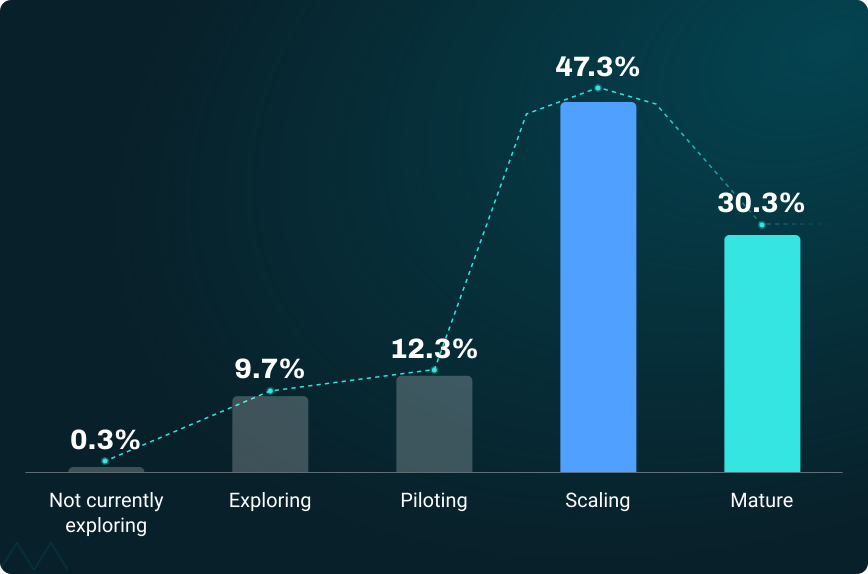
Scaling means having multiple AI use cases fully deployed across teams; mature means AI is embedded enterprise-wide across core processes.
Between “scaling” and “mature” is where AI adoption gets harder. It’s also where pressures like integration, ownership and governance start to surface.
Agentic AI is accelerating
Agentic AI is moving fast, although it’s earlier in its maturity curve than overall AI. Deployment grew at 89.4% of organizations in the past 12 months.
54% describe their agentic AI adoption as scaling or mature, well behind the 77.6% who say the same of their AI adoption overall.
Agentic AI adoption
54%
AI adoption overall
77.6%
0%
25%
50%
75%
100%

CDOs report the most mature agentic AI adoption of any role.
The balance between traditional automation and agentic AI is shifting
Today
Expected in 2 years
Almost entirely traditional automation
15.3%
13.7%
Almost entirely traditional automation
45%
25.7%
Almost entirely traditional automation
18.7%
29.7%
Almost entirely traditional automation
15.7%
19%
Almost entirely traditional automation
4.7%
11%
Almost entirely traditional automation
0.07%
0.03%
Today, 45% run mostly traditional automation with some agentic AI, and only 4.7% are almost entirely agentic. Within two years, enterprises expect that to shift substantially: for the share running mostly or entirely agentic AI to shift from 20.4% today to 30% in two years.
Agentic AI is moving fast enough that gaps in ownership, integration, governance and trust will not stay theoretical for long.
Nobody fully owns agentic AI in the enterprise
No single function has taken full ownership of agentic AI:
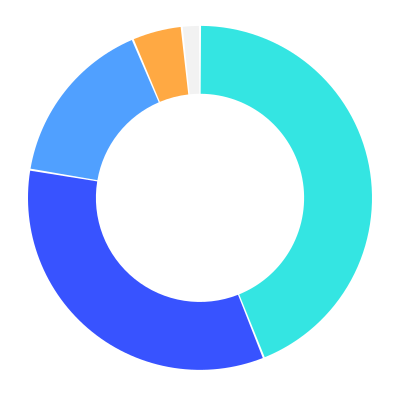
44% of organizations put IT Operations in charge of agentic AI initiatives
33.7% assign it to a dedicated AI or automation team
16% leave it with software engineering
4.7% allow individual business units to handle agentic AI
1.7% say no team owns agentic AI at all
When responsibility is split, integration and governance decisions inherit that same fragmentation.
The approach to building agentic AI is just as divided:
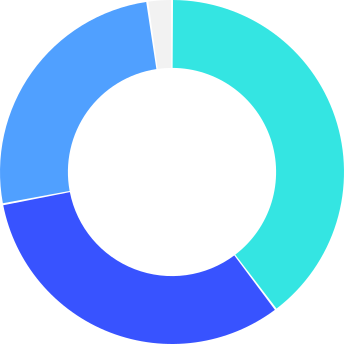
39.7% primarily buy pre-built agents
32.3% use a mix of pre-built and custom
25.7% build custom agents in house
2.3% don’t use agentic AI
Neither decision, who owns it or how it’s built, has converged on a default. Most organizations are running a mix of bought and custom agents, with no single function accountable for how they work together.
Legacy and siloed systems are the load-bearing walls
While organizations know what they want to do with AI, they’re running into major barriers. With no single team accountable end to end, the standout technical challenge — connecting AI to the systems that already run the business — has gone unsolved.
Top barriers to scaling AI, ranked
Integrating AI with existing and legacy systems
22%
Governance, risk, security or compliance concerns
18%
Data quality, availability or accessibility issues
17%
Siloed systems or platforms that can’t easily communicate or share data
10.3%
Lack of talent, skills or expertise
8.7%
Unclear ROI or business case
8%
Lack of executive sponsorship, organizational support or budget
6.7%
Not every respondent ranked every barrier.
When asked why AI initiatives stall before reaching everyday use, three reasons stood above the rest:

Difficulty integrating with existing systems

Data quality issues

Governance concerns
Only 41.7%
report a strong ability to connect AI agents to legacy or core systems

55%
report the same for cloud and SaaS applications


Redwood customers were 1.2x as likely as those who do not use Redwood solutions to report a strong ability to connect to both legacy and cloud/SaaS applications.
Proving ROI is still hard, even where adoption is strong
Even where AI is technically connected well enough to run, proving what it’s worth is a separate, unresolved problem.
Confidence in measuring the ROI of AI is split almost exactly down the middle:
48.3%
47%
4.6%
48.3% are very confident their organization is accurately measuring AI ROI
47% are only somewhat confident
The remaining 4.6% are not confident at all, or aren’t measuring ROI
The most common ways organizations measure ROI?

Productivity or efficiency gains
55.3%

Revenue growth
47.3%

Faster time-to-market
42%
There’s real doubt about whether AI spend is worth it.
43.7%
say AI spend is delivering strong value
21%
say it delivers value, but they’re spending more than necessary
14.7%
are increasingly questioning whether it’s justified
11.4%
have already begun scaling back investment
8.7%
say it’s too early to say

11.3%
of organizations have already begun scaling back AI investment due to cost or ROI concerns, which is a clear sign that enterprise AI spending is facing real scrutiny, not just early enthusiasm.
As far as why some think they’re overspending, it’s not price or vendor choice. They point to AI usage scaling faster than cost controls, followed by limited cost visibility.
Governance hasn’t kept pace with deployment
AI governance policies are common, but enforcement is where it gets tricky.
58.3% have a formal AI governance policy that is consistently enforced; 31.7% have one, but it’s inconsistently enforced.
77%
have experienced a negative consequence from an ungoverned AI agent
Unexpected or excessive cloud and computing costs are the most common consequence.

What ungoverned AI agents have cost organizations
Unexpected or excessive cloud/computing costs
34.7%
Operational disruption or system outage
31%
A compliance or regulatory issue
30.7%
Unauthorized access to sensitive data
28%
A reputational or customer-facing issue
28%
An incorrect or costly automated decision
24%
None of the above
18.7%
Not applicable
4.3%
Respondents could select multiple consequences.
CIOs report more types of ungoverned AI consequences than any other role, and VPs/Directors of IT most commonly point to unexpected or excessive cloud costs.
Just 18.7% of all respondents (not just heavy agentic AI users) report no consequences at all.
“Governance failures are an execution problem.”
– Charles Crouchman, Chief Product Officer, Redwood Software

By the seat: How this differs by role
45%

of CDOs reported a reputational or customer-facing issue
41.9%
of CIOs reported a reputational issue too, with compliance, cost overruns and unauthorized access clustered close behind
36.6%
of CTOs reported an operational disruption or outage
37.6%
of VP/Directors of IT reported unexpected or excessive cloud costs
Trust breaks down where stakes are highest
Governance failures explain why trust isn’t uniform.

Combined trust (full trust + trust with human review) is 69.7% for financial transactions and 70.3% for production systems, compared to over 80% for internal workflows and IT infrastructure tasks.
Trust in AI agents to operate autonomously
Domain
Fully trust
Trust with human review
Limited trust
Do not trust
Financial transactions
Fully trust
22%
Trust with human review
47.7%
Limited trust
26.3%
Do not trust
3.3%
Production/data base systems
Fully trust
23%
Trust with human review
47.3%
Limited trust
24.3%
Do not trust
4.7%
Regulatory or compliance reporting
Fully trust
23.3%
Trust with human review
48.7%
Limited trust
24.3%
Do not trust
3%
Customer-facing communications
Fully trust
24.3%
Trust with human review
52.7%
Limited trust
20.3%
Do not trust
2.3%
IT infrastructure management
Fully trust
21%
Trust with human review
59.7%
Limited trust
16.7%
Do not trust
2%
Internal workflow or task orchestration
Fully trust
26.7%
Trust with human review
53.7%
Limited trust
18.7%
Do not trust
1%
Observability and stronger guardrails are nearly tied as the top two changes that would increase willingness to deploy autonomous AI agents on business-critical processes, cited by 49.3% and 48.3%, respectively.
Enterprise leaders also note observability and the ability to integrate with legacy systems as the two factors that would most increase their confidence to expand agentic AI use overall, cited by 62% and 58% respectively. Both point toward true orchestration as the way forward, before adding more AI.
By the seat: How this differs by role

73.2% of CTOs and 67.4% of CIOs cite observability as what would most increase their confidence, both well above the 62% overall figure
68.2% of VP/Directors of IT and 60.5% of CIOs cite legacy-system integration, both above the 58% overall figure
The next milestone: Orchestration
Self-reported AI readiness looks strong on its face, but the specific capabilities orchestration depends on are still missing at roughly half of organizations.
54.3%
say they’re fully prepared to orchestrate AI workloads across existing systems, data and processes
42.3%
have a centralized registry of deployed AI agents
54.7%
have a defined, funded plan already in motion
51.3%
have real-time monitoring of agent activity in place today
What would increase confidence to expand agentic AI use?

Observability

Legacy intrgration
Autonomy does not equal autopilot.
– Charles Crouchman, Chief Product Officer, Redwood Software

What sets the most prepared organizations apart
Most enterprises have the ambition, adoption and early results to show AI is working. What’s still missing is the layer that connects AI agents to the systems, guardrails and audit trails that make autonomy safe to expand.
Respondents using Redwood Software solutions to orchestrate mission-critical business and IT processes are
1.4x
as likely as those using other solutions to have a fully prepared, funded plan to connect AI to existing workloads already in motion.
They didn’t wait for autonomy to outpace their infrastructure. Instead, they’re treating orchestration, integration, ownership and governance as prerequisites for scaling AI.

It’s no longer a question of whether AI can be used in a process. It’s whether a process enhanced by AI can run at scale with the level of security, observability and auditability that an enterprise needs.
– Charles Crouchman, Chief Product Officer, Redwood Software
Explore what agentic AI readiness looks like in practice.
All data represented in this report was gathered by Redwood Software and Leger Opinion, a third party whose panel was used in whole for data collection.